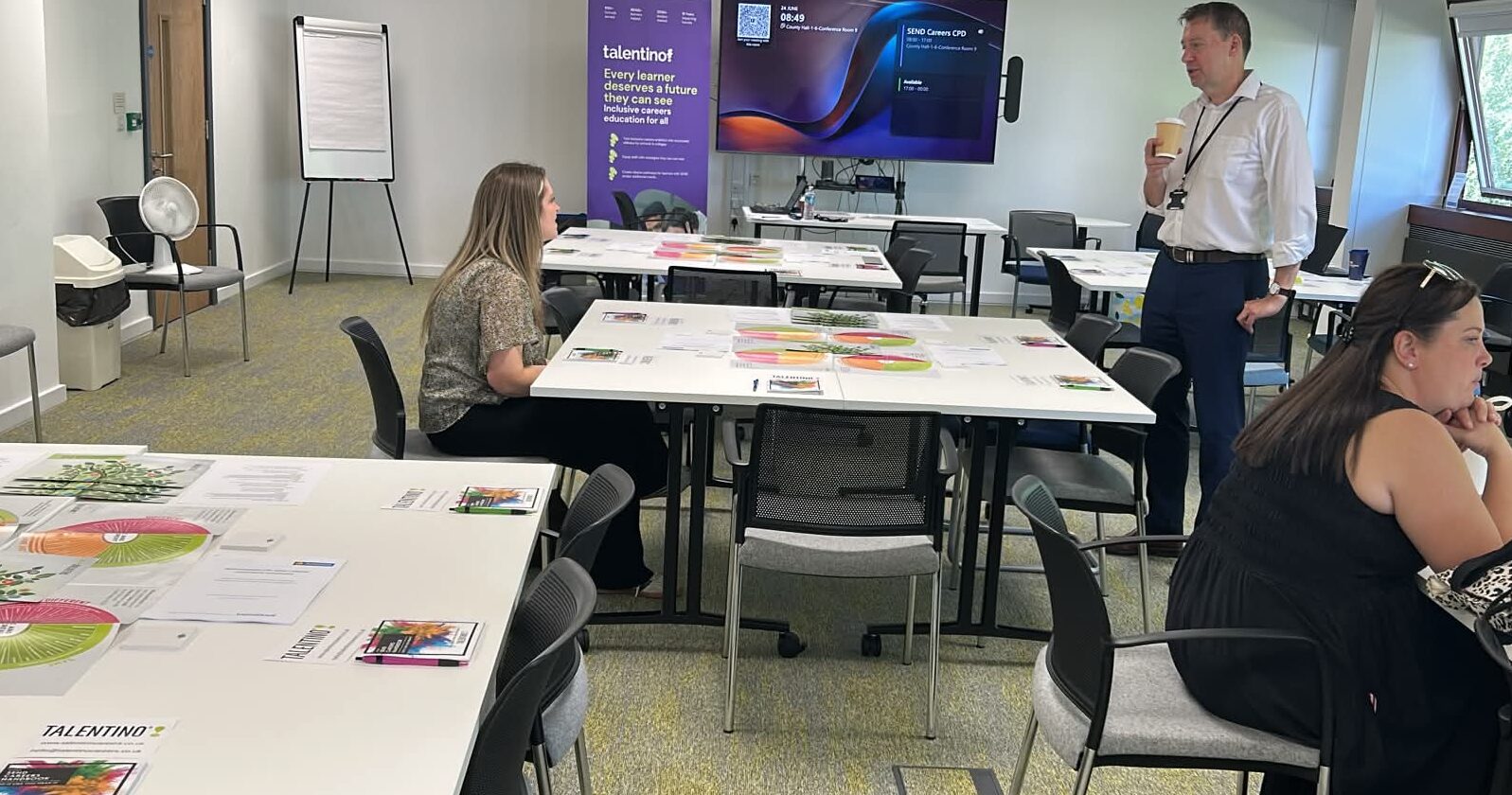
Talentino delivered a three-part professional development programme for Careers Leaders, SENDCOs and education professionals in Northumberland, focused on strengthening inclusive careers education and Preparation for Adulthood across SEND settings.
The workshops explored how schools can build more strategic, destination-led careers programmes that support learners with SEND to understand their strengths, explore future pathways and move towards meaningful adult lives.
Strengthening inclusive careers leadership
The programme supported staff to reflect on the foundations of effective careers leadership in SEND settings, including careers strategy, governance, Compass and Compass+ use, destinations tracking and EHCP-linked reporting.
Participants explored how a clear annual careers strategy can help schools plan provision across Key Stages 3 to 5, connect careers activity to Preparation for Adulthood outcomes and use evidence to strengthen future planning.
A key focus was moving from careers activity to careers impact: using learner aspirations, destination data, employer feedback and EHCP outcomes to shape provision that is purposeful, progressive and meaningful.
Building employer engagement and work-related learning
The workshops also focused on employer engagement and work-related learning for learners with SEND.
Staff explored practical approaches to building high-quality employer partnerships, including how to approach employers, frame the value of inclusive opportunities and create staged pathways from in-school experiences to community-based and external placements.
The programme also introduced supported employment approaches, including job coaching principles, task analysis, systematic instruction, fading support and effective communication with employers.
This helped staff consider how work-related learning can be made safer, more structured and more accessible, particularly where schools are preparing for increased expectations around work experience and employer encounters.
Embedding careers across the curriculum
Another key theme was whole-school careers culture and the role of the curriculum in helping learners connect learning to life beyond school.
Participants explored how careers can be embedded across subjects in a meaningful way, including how to evidence Benchmark 4 in a SEND context and how to make curriculum links more consistent across the school.
The workshops also considered how enterprise, Skills Builder and vocational learning can be used more effectively when they are connected to clear skills development, learner progression and Preparation for Adulthood outcomes.
Strengthening parent and carer partnership
The programme recognised that parents and carers play a vital role in Preparation for Adulthood and future planning.
Staff explored practical ways to make careers information more accessible, improve communication with families and support parents and carers to understand post-16, post-19, FE, training and social care pathways.
This included discussion around accessible careers webpages, easy-read information, case studies, provider access information and meaningful parent events that help families feel more informed and involved.
Linking careers, EHCPs and vocational profiles
The workshops also focused on the connection between personal guidance, EHCPs and vocational profiling.
Participants considered how guidance conversations can be structured for learners with different needs, how vocational profiles can inform curriculum planning and placements, and how careers evidence can feed more consistently into EHCP annual reviews.
This helped staff reflect on how careers education can become part of a wider learner-centred planning cycle, rather than sitting separately from SEND provision.
Practical tools, reflection and action planning
Across the three sessions, participants used practical tools, reflection prompts and action-planning activities to review current practice and identify clear next steps for their own settings.
The workshops were designed to be realistic for busy schools, supporting staff to strengthen what is already working while identifying manageable ways to improve consistency, confidence and impact.
Outcomes from the programme
By the end of the programme, staff left with practical strategies, greater confidence and clear actions to strengthen inclusive careers programmes in their settings.
The workshops supported schools to think more strategically about careers leadership, employer engagement, work-related learning, parent partnership, EHCP integration and destination-led planning.
Most importantly, the programme kept the focus on learners: helping young people with SEND access careers education that is meaningful, inclusive and connected to their future lives.