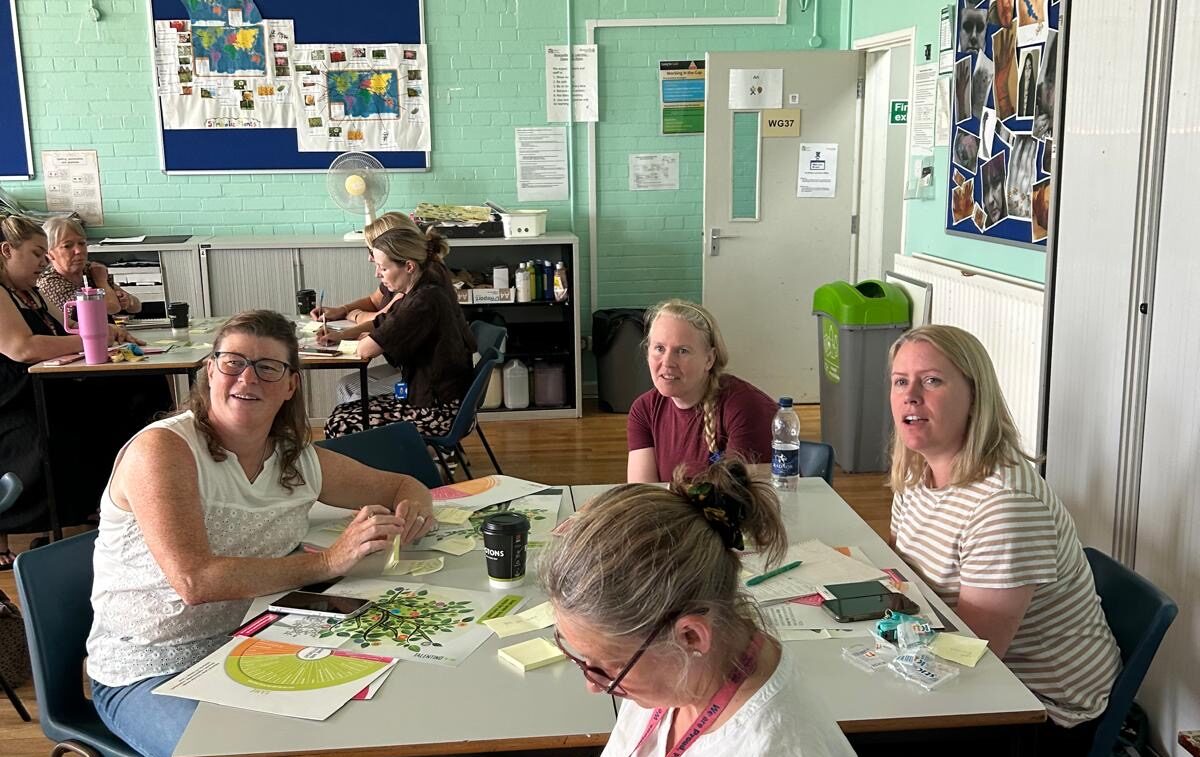
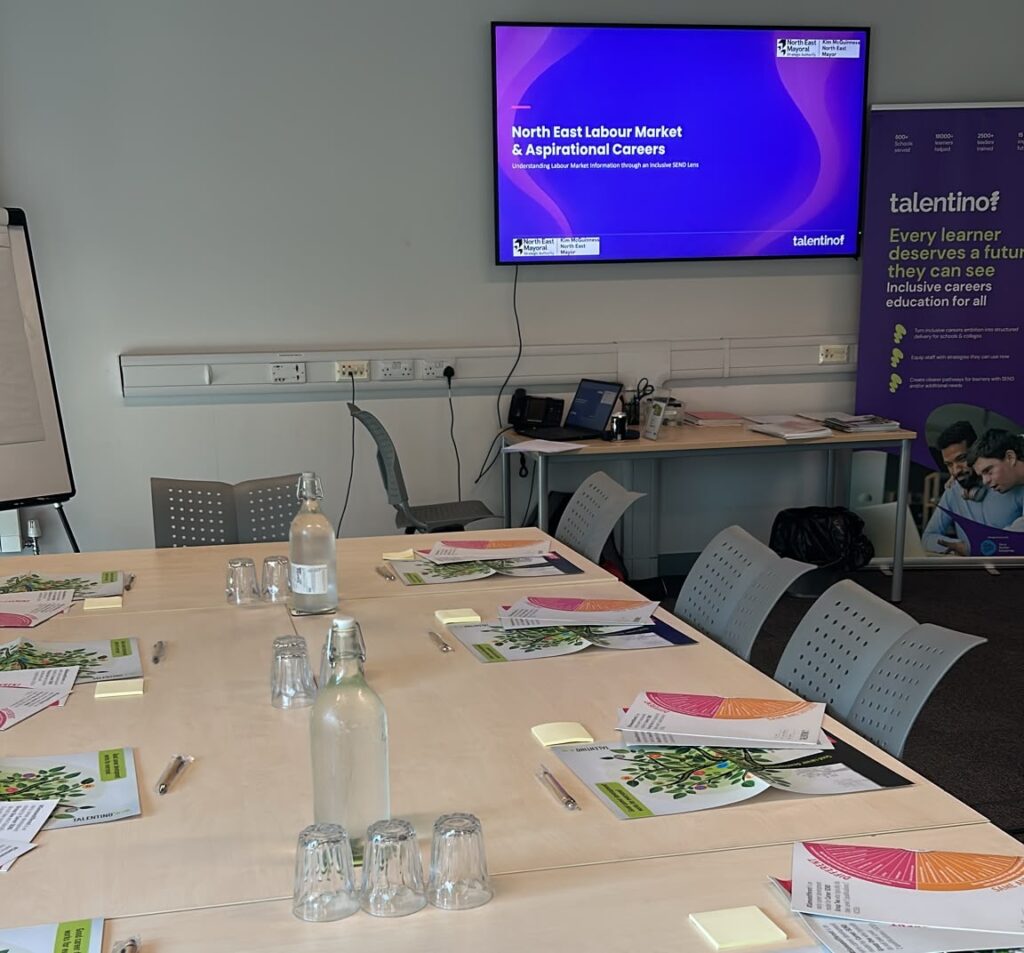
Talentino delivered a three-part professional development programme commissioned by the North East Combined Authority for SENDCOs, Careers Leaders and specialist school staff.
Strengthening Inclusive Careers Practice Across the North East
The programme was designed to strengthen practitioner confidence in labour market intelligence, progression pathways and whole-school Preparation for Adulthood, helping schools and settings provide more informed, inclusive and aspirational support for young people with SEND.
Across three connected workshops, participants explored how regional opportunity, learner-centred pathway planning and everyday practice can work together to improve long-term outcomes.
A Three-Part Professional Development Programme
1. Understanding Labour Market and Supporting Career Conversations
The first workshop focused on helping practitioners understand the changing North East economy and translate labour market intelligence into meaningful careers learning for young people with SEND.
Participants explored:
- North East priority growth sectors
- the importance of the foundational economy
- strengths-based and aspirational careers conversations
- ways to embed local labour market intelligence across the curriculum
- how regional opportunity can inform destination planning
Practitioners considered how learners could understand local opportunities, connect those opportunities to their own strengths and identify practical next steps.
2. Post-16 and Post-18 Pathways for Learners with SEND
The second workshop supported practitioners to make sense of the wide range of education, employment and adult-life pathways available to young people with SEND and putting the learner at the centre.
The workshop explored:
- further education
- academic, technical and vocational learning
- apprenticeships
- supported pathways
- transition readiness
- vocational profiling
- learner and family voice
- pathway comparison and decision-making
Participants considered whether each route would genuinely improve the learner’s future, what barriers might need to be removed and how progress would be reviewed.
3. Building a Whole-School Culture of Preparation for Adulthood
The final workshop explored how careers education can become part of the culture of a setting rather than the responsibility of one department. Participants reflected on the careers learning already happening through everyday teaching and interaction including:
- making choices
- communicating preferences
- developing independence
- managing routines
- solving problems
- working with others
- reflecting on experiences
- participating in the community
- learning to ask for help
The workshop also examined the role of teachers, teaching assistants, therapists, senior leaders, families, employers and community partners in shaping a learner’s future. Participants mapped responsibilities, identified gaps and explored how careers, curriculum, Preparation for Adulthood, EHCP outcomes, transition and family engagement could become more connected.
Supporting Aspirational and Achievable Futures
A central theme across the programme was that careers education is not only about helping a young person choose a job. It is about preparing them for a meaningful adult life. Employment may be one important outcome, but it should not be treated as the only measure of success. Every learner has a career, although the destination, pace, support and definition of progress will look different for each individual.
Young people with SEND can too often encounter assumptions that narrow their options before their strengths, preferences and aspirations have been properly understood.
The programme encouraged practitioners to replace limiting questions with more constructive ones. This meant combining high expectations with honest, practical planning around communication, sensory needs, travel, support, confidence, independence and transition.
Commissioned by the North East Combined Authority
The event was commissioned to strengthen practitioner knowledge, confidence and consistency across participating schools and specialist settings. It aligned inclusive careers practice with the North East Combined Authority’s economic priorities while keeping the needs, strengths and aspirations of young people with SEND at the centre.
By connecting regional labour market intelligence, progression pathways and whole-school practice, the programme provided practitioners with a clearer framework for supporting informed and meaningful futures.